(425) 223-3851
 14044 NE 8th St, Bellevue, WA
 Schedule Tour




Blog
Why We Close for Teacher In-Service Days

A few times a year, Language Garden closes for a Teacher In-Service Day. Families see it on the Schedule and Fees calendar in June, then forget about it until the week before, and then the questions come: Why is the school closed? What do the teachers do all day? Could it be done after hours instead?
Fair questions. Here is what an in-service day is, what happens during one, and why we think it is worth a day of closure.
What an in-service day is
An in-service day is a working day for teachers with no children in the building. The teachers are on the clock. The school is open. The only thing missing is the students.
Every school in the United States has them, from public elementary schools to universities. Preschools are no different. Ours are listed, with every other closure, in the Schedule and Fees document that every family receives at enrollment and again each spring when the new year's version comes out.
What the teachers do
Three things, mostly.
Required training. Washington State requires early childhood teachers to complete ten hours of continuing education every year (WAC 110-300-0107). Some of that happens online, in pieces, on evenings and weekends. Some of it works far better in a room full of colleagues, where a question from one teacher turns into a conversation that helps everyone. An in-service day gives us that room.
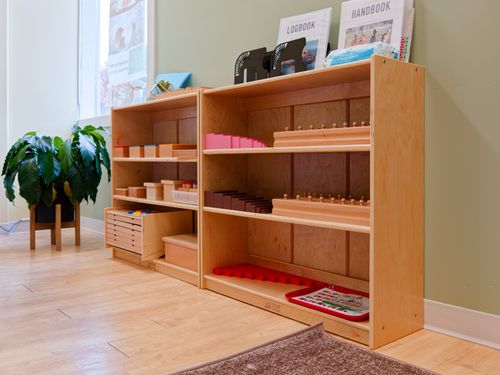
Classroom work that cannot happen with children present. A Montessori classroom is a carefully arranged environment. Materials are checked for missing pieces, repaired, cleaned, and rotated for the season. Shelves are reorganized as the class's needs change. Some of this is routine upkeep. Some of it is a teacher standing in the middle of the room, looking at where the children have been bunching up and where they have been avoiding, and moving things until the room works better. None of it can happen at 9 AM on a Tuesday with twenty children in the room.
Talking to each other. The teachers in a preschool rarely get to sit down together. Someone is always with children. On an in-service day, the whole staff can discuss what is going well, what is not, which child needs a different approach, and how the toddler room and the preschool rooms can hand children off more smoothly. These conversations make the school better in ways that are hard to see from the outside and easy to feel from the inside.
And then there is lunch. Our teachers eat with children all year. On in-service day they eat with each other, at a table, without cutting anyone's food. It is one of the few times that happens.
Why not evenings and weekends?
Because our teachers already give us their days, and we would rather not take their evenings and weekends too. Teaching young children is physical, attentive, demanding work. A teacher who has been on the floor since 7:30 AM is not in a position to absorb a training module at 6 PM, and a school that asks her to will not keep her long.
We would rather close for a day and have teachers who stay for years. Our families tell us that is the trade they prefer as well.
How to plan for it
Every closure for the school year is published in the Schedule and Fees document before the year begins. In-service days, holidays, parent conference days, and breaks are all there. We also post a reminder on our social media accounts the week before each closure, and send a note through Brightwheel.
Thank you for trusting us with your children, and for giving our teachers the day they need to do this work well.